
.svg)

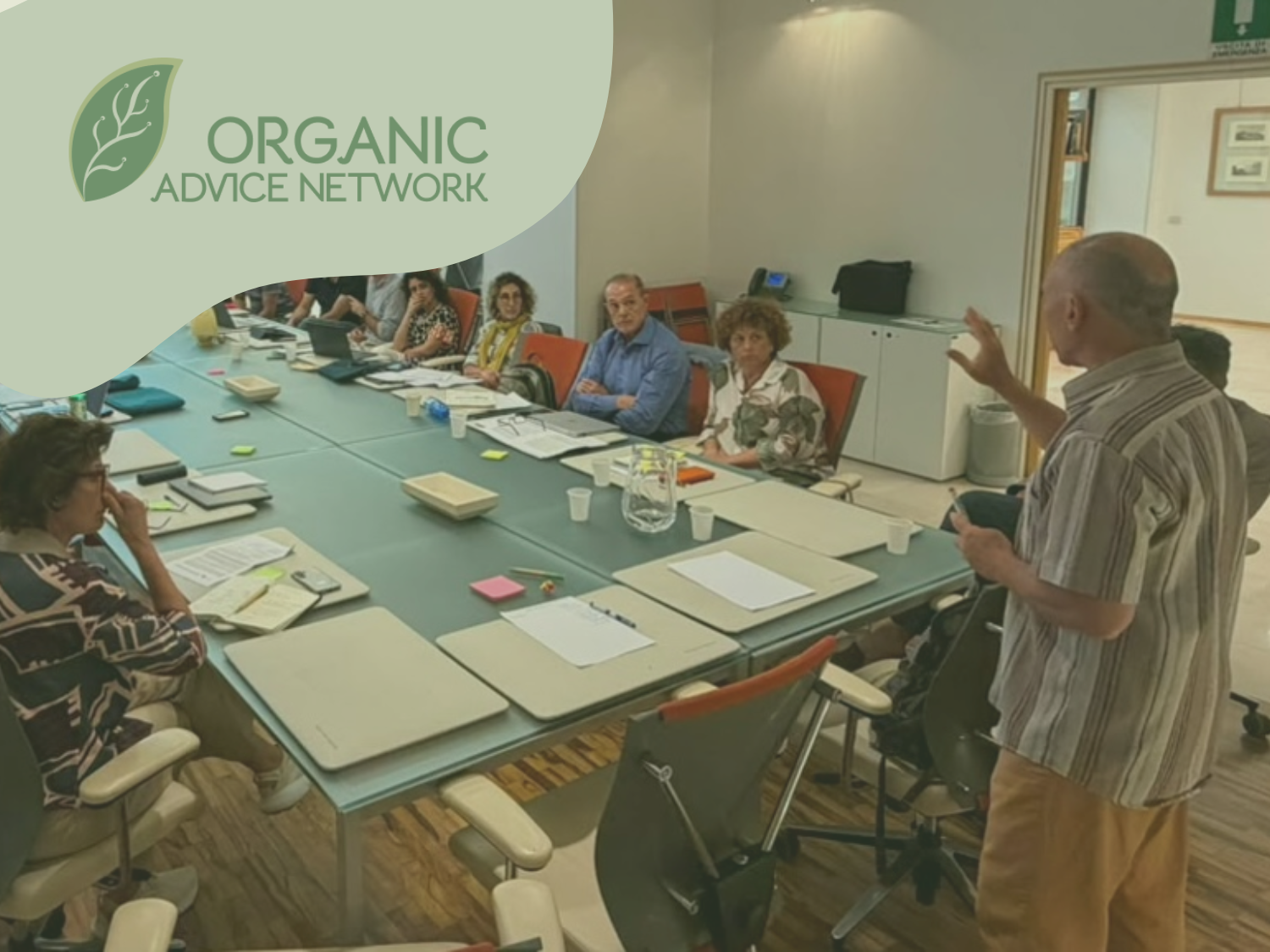
National Workshops 2026
To work towards our goal of strengthening organic advisory services across Europe, we have organized National Workshops for each of our core 14 network countries in 2026:
Austria, Belgium, Bulgaria,Croatia, Denmark, Estonia, France, Germany, Hungary, Italy, Portugal, Romania,Spain, and Switzerland. The purpose of these workshops is to identify and assess the drivers and barriers affecting organic advisory services in each country through conducting a SWOT analysis (strengths, weaknesses,opportunities, and threats). The SWOT analysis focuses on three key themes: the general organic advisory system, advisors’ education and training, and organic advice financing. Each workshop is organized and facilitated by our project partners in their respective countries. To date, workshops have been completed in 12 of the 14 countries.
The workshops have been highly successful with motivated and passionate participants engaging in rich discussions that have revealed several interesting and surprising findings. The following are a few examples from several of the national workshops.
The workshops brought together a diverserange of stakeholders, including advisors, farmers, researchers, and professionals from various organizations and associations. In Portugal and Austria, the diversity of stakeholders brought differing opinions and perspectives to the discussions, making it a challenge to reach common consensus. In contrast, in Denmark, our advisory partners were surprised that diverse stakeholder groups shared similar opinions, analyzed situations insimilar ways, and highlighted the same key topics.
Workshops in all countries explored funding mechanisms, with many discussing how to better support both organic advisors and farmers by ensuring that funding reaches the right people and initiatives. In Switzerland, participants highlighted concerns over competition between advisors, financial cutbacks at regional and national levels, and aperceived lack of policy support. Discussions in Portugal identified that combining funding for organic agriculture with other initiatives, such as regenerative or agroecology, limited its availability to advisors and farmers. A noteworthy finding in Italy was that paid advisory and training services were more effective because they were perceived by farmers and advisors as more valuable than free services.
An unexpected insight from France was participants’ regular use of social media for peer-to-peer exchanges and learning, as well as participants’ willingness to seek exchange opportunities across national borders despite language barriers. In Hungary, the workshop revealed a lack of awareness among organizations on their ability to host training events for advisors, allowing advisors to earn their required annual credits. The German workshop revealed a shortage of generalist advisory services, as demand and willingness to pay for specialized advice have led advisors to increasingly focus on specific areas.
The full results of the National Workshops will be synthesized into a report, which will be publicly available online next year online. There will also be a second workshop in each country in 2027 to discuss policy recommendations where participants can contribute to the development of a national action plan. Building on insights from both workshops and previous project work, we will develop national action plans for our core network counties, as well as at the EU level, to strengthen organic advisory services.

Get updated about OrganicAdviceNetwork activities and subscribe to the newsletter:


.png)
OrganicAdviceNetwork is funded by the European Union (Grant no. 101134850) and by the Swiss State Secretariat for Education, Research and Innovation (Grant no. 23.0639, 101134850). Views and opinions expressed are however those of the author(s) only and do not necessarily reflect those of the European Union, European Research Executive Agency or Swiss State Secretariat for Education, Research and Innovation. Neither the European Union nor any other granting authority can be held responsible for them.
